Description
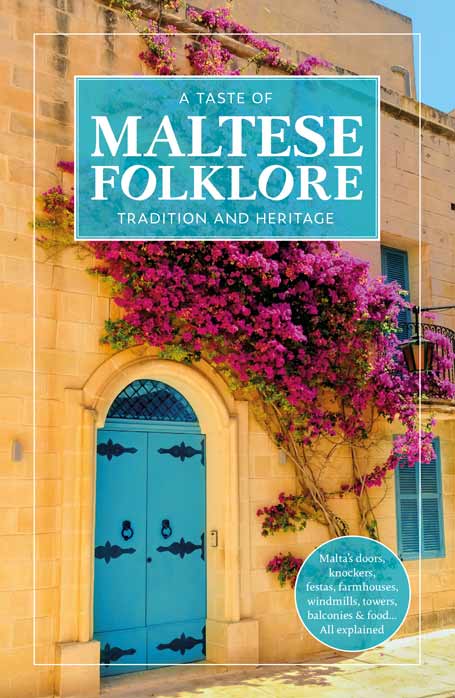
Situated in the middle of the Mediterranean sea, Malta is a melting pot of cultures with a unique identity that is both curious and captivating. Maltese customs are largely rooted in rural folklore and religion and are still clearly visible in everyday life.
In the early part of its history Malta was heavily exposed to Semitic influences although present-day Maltese culture is essentially Latin European with the recent British legacy also in evidence. The language has Semitic roots but the cuisine, traditions, buildings, furniture all show signs of influence from its Sicilian and Southern European neighbours.
This book will help you discover and understand the Islands’ long tradition in crafting boats, niches, chapels, door knockers and dwellings as well as its diverse cuisine, religious celebrations and costume.
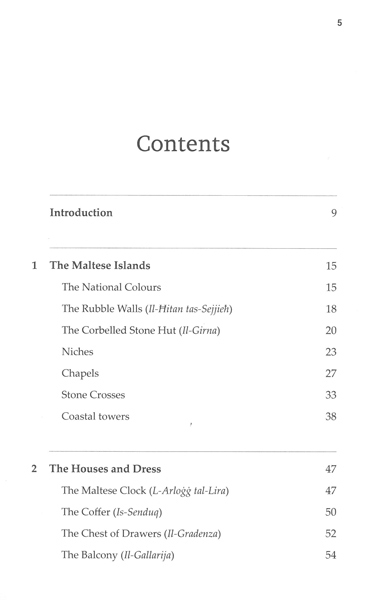
Contents
The Maltese Islands
The National Colours
The Rubble Walls (Il-Ħitan tas-Sejjieħ)
The Corbelled Stone Hut (Il-Girna)
Niches
Chapels
Stone Crosses
Coastal Towers
The Houses and Dress
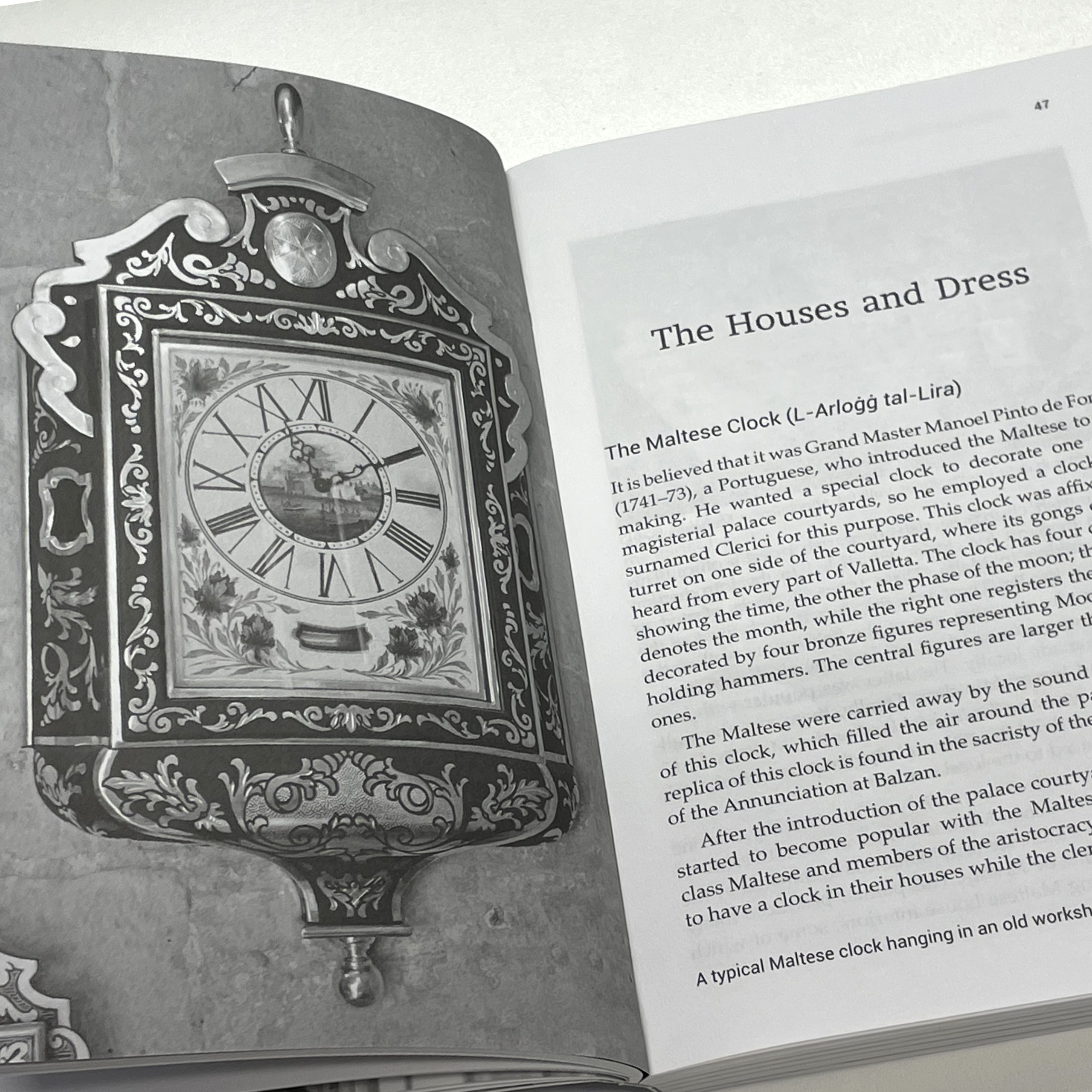
The Maltese Clock (L-Arloġġ tal-Lira)
The Coffer (Is-Senduq)
The Chest of Drawers (Il-Gradenza)
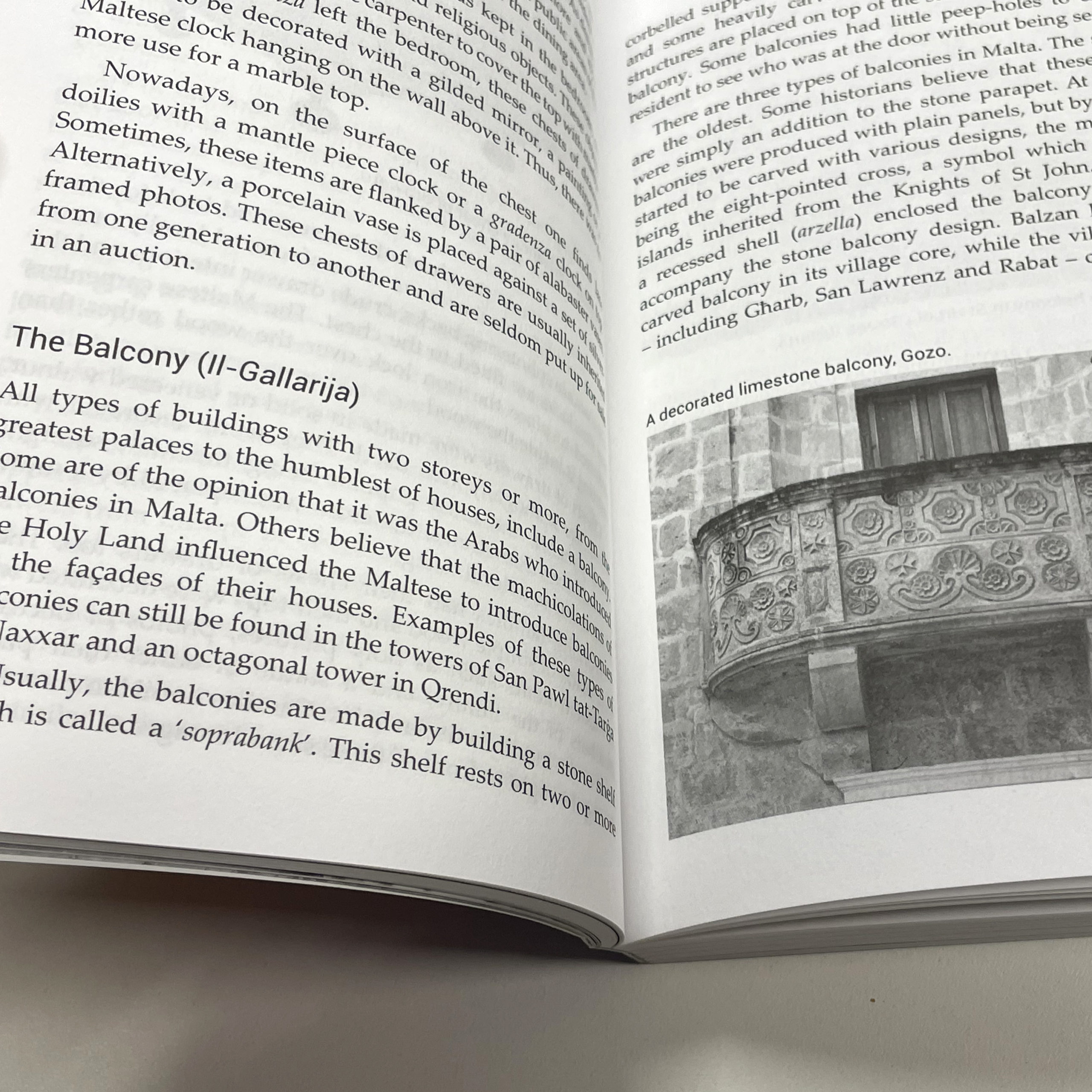
The Balcony (Il-Gallarija)
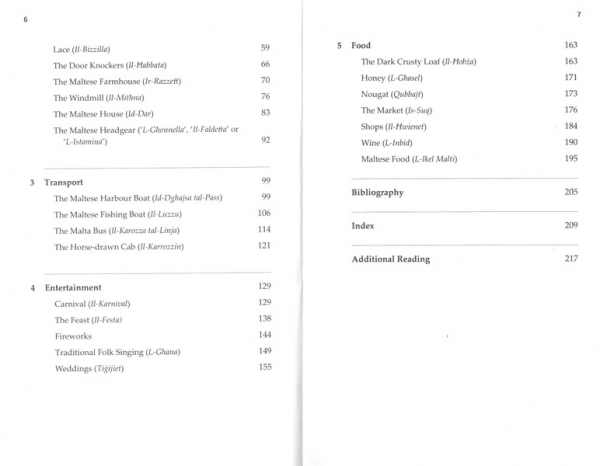
Lace (Il-Bizzilla)
The Door Knockers (Il-Ħabbata)
The Maltese Farmhouse (Ir-Razzett)
The Windmill (Il-Mitħna)
The Maltese House (Id-Dar)
The Maltese Headgear (‘L-Għonnella’, ‘Il-Faldetta’ or ‘L-Istamina’)
Transport The Maltese Harbour Boat (Id-Dgħajsa tal-Pass)
The Maltese Fishing Boat (Il-Luzzu)
The Malta Bus (Il-Karozza tal-Linja)
The Horse-drawn Cab (Il-Karrozzin)
Entertainment
Carnival (Il-Karnival)
The Feast (Il-Festa)
Fireworks
Traditional Folk Singing (L-Għana)
Weddings (Tiġijiet) Food
The Dark Crusty Loaf (Il-Ħobża)
Honey (L-Għasel)
Nougat (Qubbajt)
The Market (Is-Suq)
Shops (Il-Ħwienet)
Wine (L-Inbid)
Maltese Food (L-Ikel Malti)
Bibliography























Reviews
There are no reviews yet.